
INFORMATION HUB
Influenza in Pregnancy: What every expecting mom should know
What is Influenza?
- Influenza is an RNA virus which is transmitted primarily by respiratory droplets.
- There are 3 main types that infect humans: A, B, and C.
- The influenza season in the Philippines occur usually during changing seasons, summer towards rainy season, between June towards August, then rainy season towards amihan (Northeast Monsoon) season, October towards December until February (and may even extend until March).
- The virus affects the airway epithelial cells.
- The incubation period (period of time between exposure to the infection and developing symptoms) is about 1-5 days.
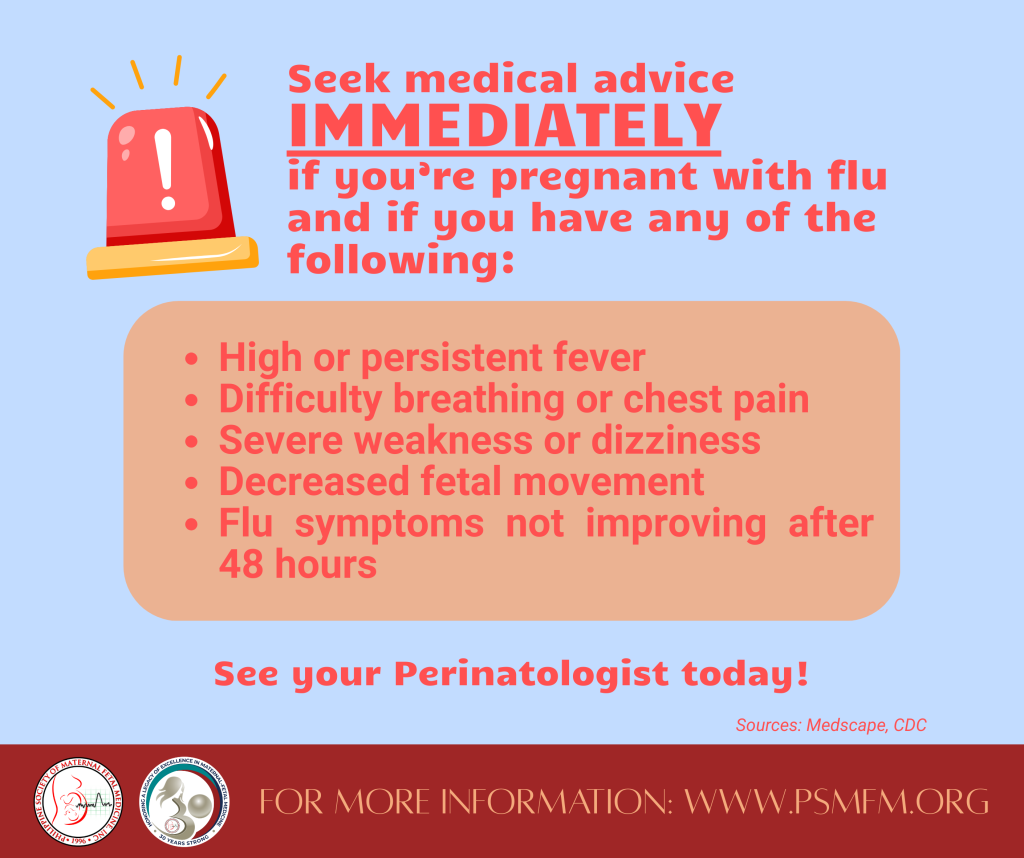
- The symptoms include: fever, cough, colds, chills, headache, body pain, and body weakness.
- A simple flu can lead to severe illness including pneumonia.
- A secondary infection with bacterial pneumonia may develop within 1-3 weeks from onset of symptoms and may lead to difficulty of breathing.
What are the risks of Influenza infection?
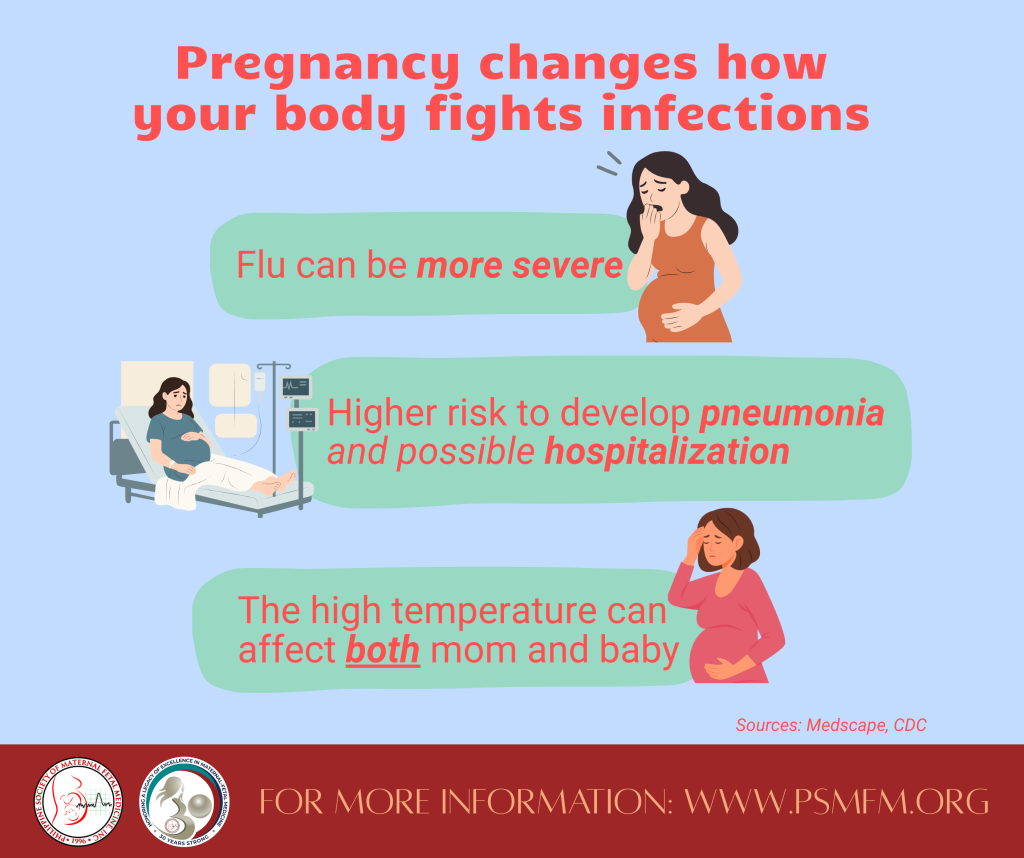
- While the risk of severe flu is more common among elderly (>65 years of age) and young (<2 years of age), pregnant women are also at risk because of their immune suppression (changes in the immune system while pregnant).
- Infection in pregnancy increases risk for maternal (mom) and fetal (baby) complications.
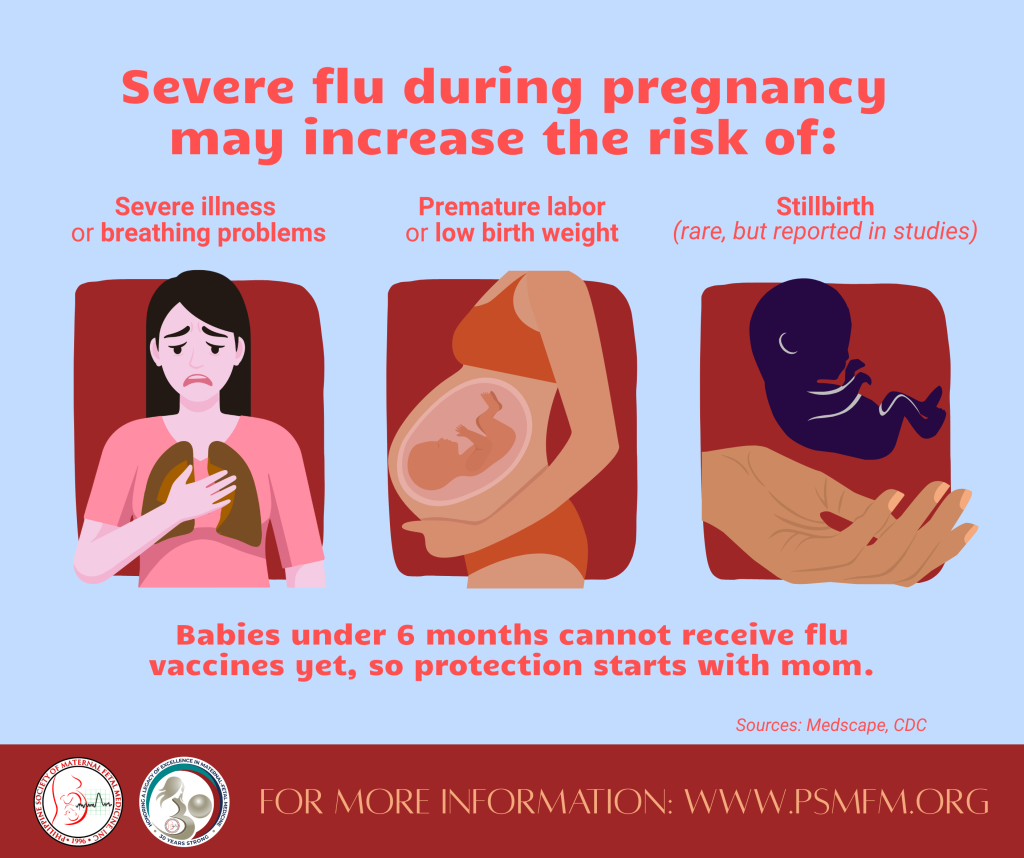
- Severe influenza infection in pregnancy may be associated with preterm birth, small-for-age baby, and rarely pregnancy loss or stillbirth.
- While the risk of death is only about 8%, there is still a significant risk of decrease in quality of life while nursing your illness.
Is the flu vaccine safe?
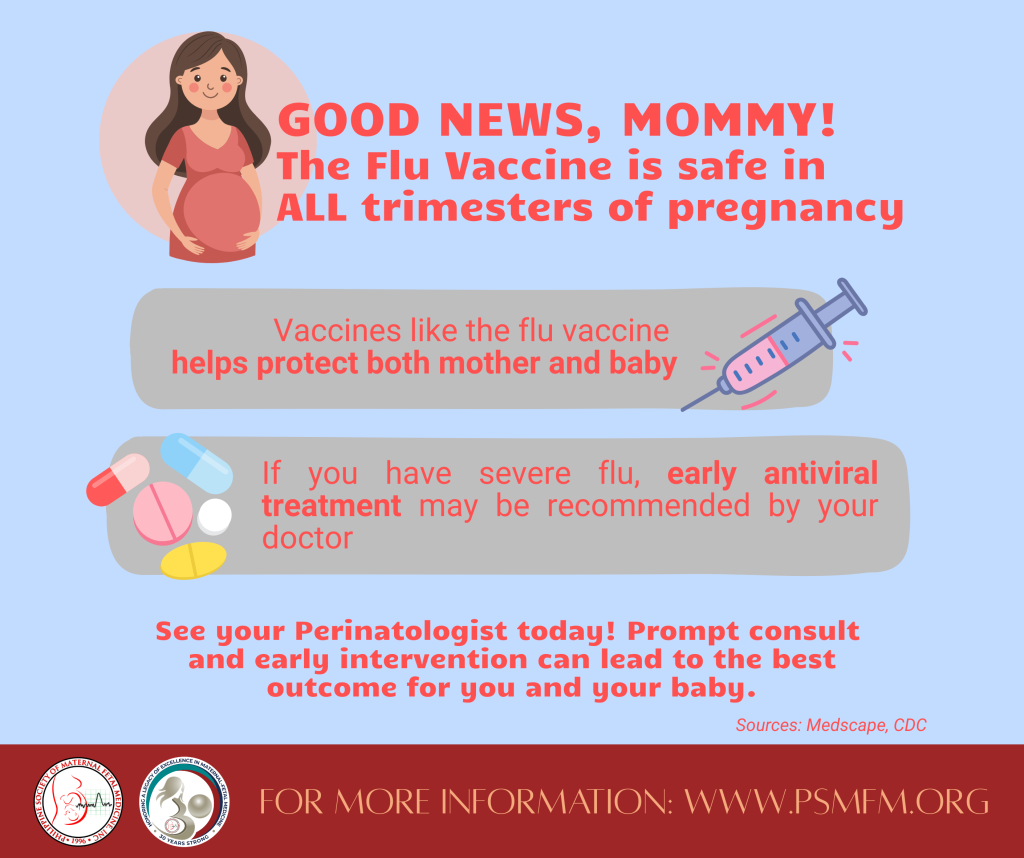
- Influenza vaccine is safe to be administered any time throughout the pregnancy.
- Only about 40-60% of pregnant women receive the flu vaccine every season.
- It is best administered before the start of the flu season. But it can be given anytime and it would still be beneficial.
- Anti-bodies from the flu vaccine also helps protect your newborn.
How can Influenza be diagnosed?
- Clinically your symptoms may already be used to diagnose flu.
- Respiratory swab specimens may be sent for RT-PCR and rapid NAAT testing. But an antigen detection assay (results are available in 10-15 minutes) may also be done.
How can Influenza be treated?
- Mild influenza infection may be given supportive treatment such as oral hydration, rest, and boosting the immune system.
- Severe influenza infection may need an additional course of 5-day anti-viral treatment. It is most effective when started within 48 hours from the start of the symptoms.
- Fever lysing drugs such as Paracetamol are safe to use in pregnancy.
- Immediate consult with your OB-GYN is a must during the start of your symptoms.
Source: Creasy and Resnik’s Maternal-Fetal Medicine, ACOG Influenza in Pregnancy, CDC Influenza
